• Skip to primary navigation
  • Skip to main content
  • Skip to primary sidebar
  • Skip to footer

ForexSchoolOnline.com

Learn to Trade Forex Online

  • Compare Brokers
    • Broker Type
      • Paypal Brokers
      • Swap-Free Brokers
      • Low Spread Brokers
      • ECN / STP Brokers
      • Market Maker Brokers
      • Non Dealing Desk Brokers
      • Low Minimum Deposit Brokers
    • Country
      • Brokers for Australia
      • Brokers for South Africa
      • Brokers for the UK
      • Brokers for the US
      • Brokers for Nigeria
    • Regulation
      • FCA Regulated Brokers
      • ASIC Regulated Brokers
      • FSCA Regulated Brokers
      • CFTC Regulated Brokers
    • Platform
      • MT4 Brokers
      • MT5 Forex Brokers
    • Strategies
      • Hedging Forex Brokers
      • Scalping Forex Brokers
      • Carry Trade Forex Brokers
      • Brokers for Indicators and EA’s
  • Start Here
    • Start Trading Guide
    • Beginner Trading Lessons
  • Free Forex Course
    • Public Login
    • Register
    • Password recovery
  • Lessons
    • Strategies
    • Videos
    • MT4 Guides
    • Money Management
  • Trade Setups
  • Tools
    • Correct Free Demo Charts
    • Forex Journal Download
    • Position Size Calculator
    • FULL List of Tools
    • Forex Demo Accounts
  • Price Action Guide
  • Free Course

Different Types of Forex Charts – Bar, Line and Candlestick

Traders at all levels use charts to analyse the markets direction and decide whether or not to place a trade.

The most common and popular types of charts that are used are in today’s trading are;

  1. Line charts
  2. Bar charts
  3. Candlestick charts


Line Chart 

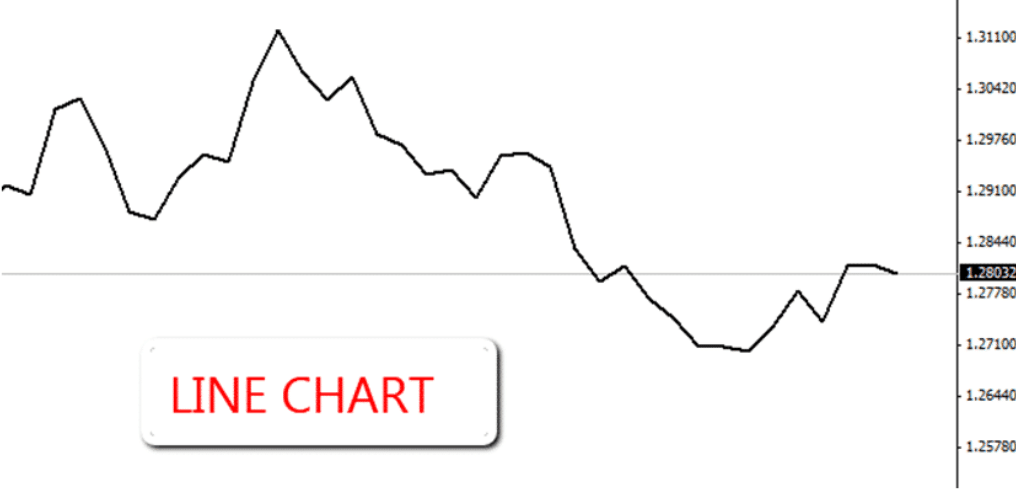
line chart


Bar Chart

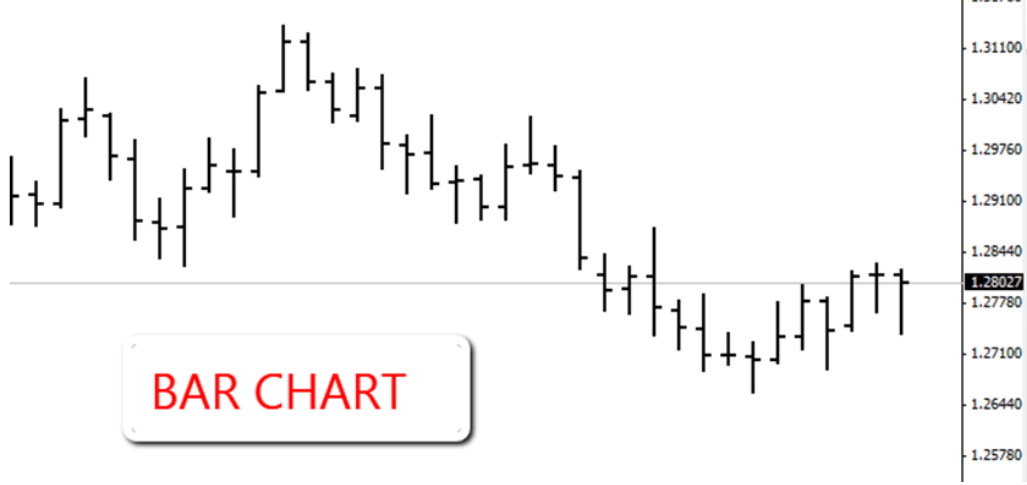
Bar chart example


Candlestick Chart

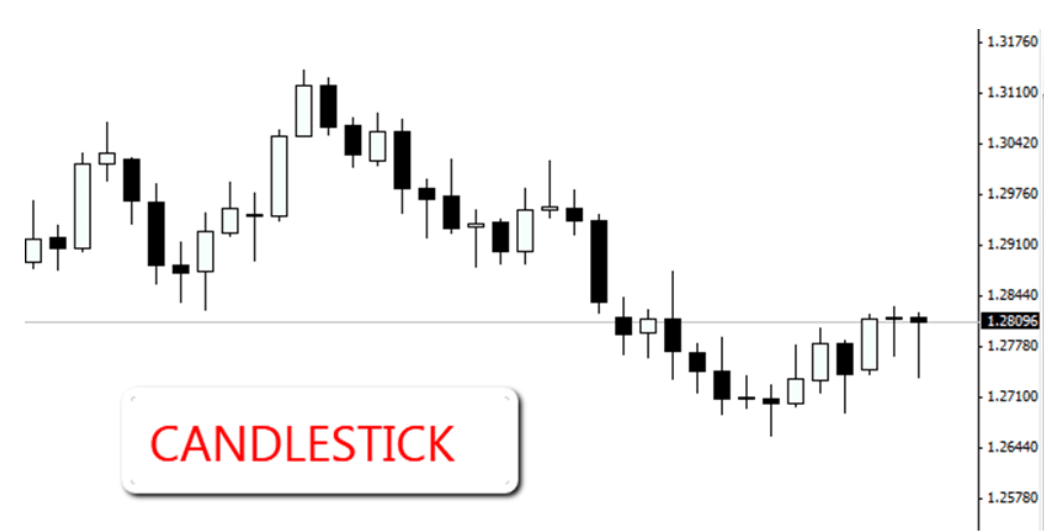
Japanese candlestick chart


All three charts shown above are of the same market and time frame.

As you can see, the price action picture gets clearer as you move down to the candlestick charts. These charts show us the best information as to what price is doing even to an untrained eye. 


Line Chart

A line chart is the simplest chart and is formed by drawing a line from one closing price to the next.

When all of the closing prices are added to create the line we can see a general picture of where price is moving. This form of chart is simple, but does leave some crucial elements out.


Bar Chart

A bar chart is another step forward from the line chart with more information added.

A bar chart shows you the opening and closing prices along with the particular time frames highs and lows.

As you can see from the image below; the bar shows where price opened on the left of the bar, how low it moved down, how high it traded up to and where it closed.
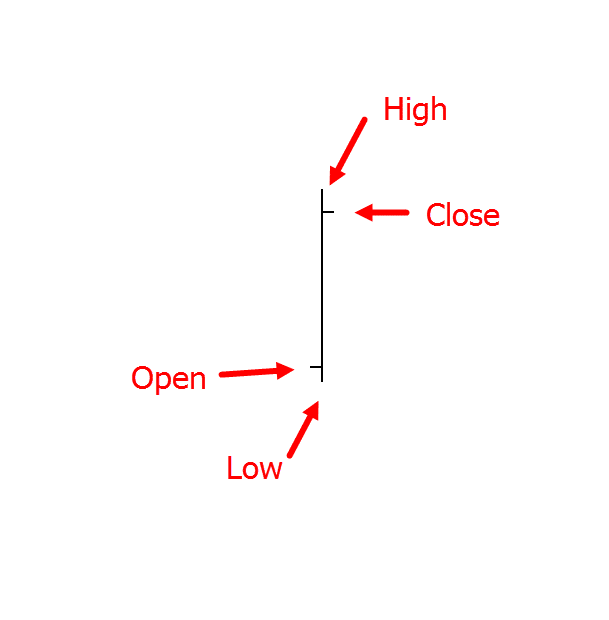
bar chart

Along with the candlestick, a ‘bar’ is one time period of information. This can be any time period you choose, for example; the 15 minute chart or daily chart.


Candlestick Chart

Candlestick or Japanese candlestick charts are what we use here at Forex School Online and what you will find in all of our graphics.

The candlestick includes the same information as the bar chart; the high, low, open and close, but it is easier to quickly read and decipher because of the candles body.

Below is an example of a candlestick. You are able to change and choose the colors to how you prefer them. In the example below; blue indicates price closed higher and red indicates price closed lower. The ‘wicks’ of the candles show how high and low price traded during the session.
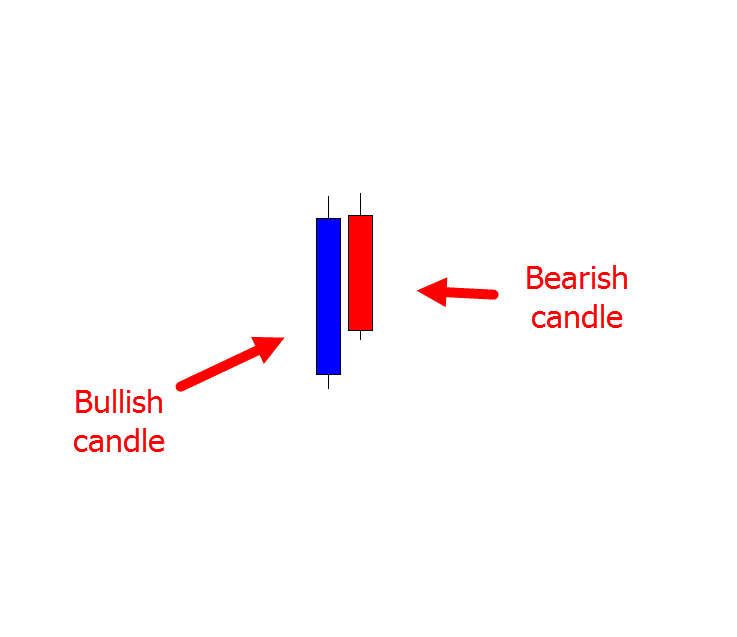
candlestick


Correct New York Close Time Charts

The unofficial Forex daily close is 5pm New York. 

With this in mind it is very important that you use the charts that reflect these timings. The best and most accurate charts to use are New York close 5 Day charts. This means that there are 5 candles per week and the daily candle closes at the end of the New York session.

Having your charts set up this way means you will get a true indication of the market with the candle opening with the Asian session and closing with the US session close.

I highly advise using the industry standard MT4. A link to the correct free New York close demo charts can be found at New York Close 5 day MT4 Charts.
What is a Market Flash Crash?

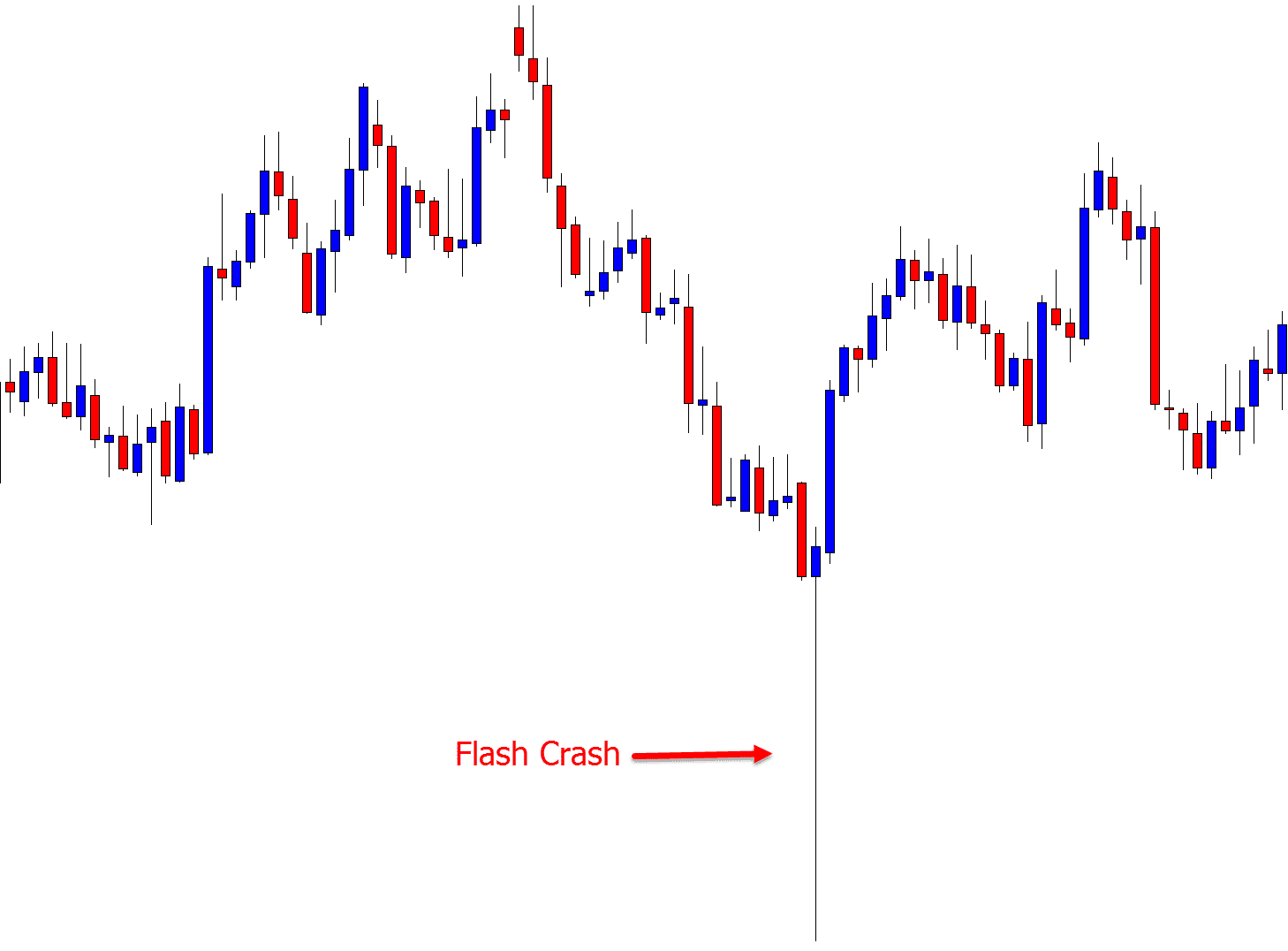
A market flash crash is a spectacular and aggressive sell off in prices of an asset or security.

Market flash crashes are quick and can often happen in seconds to minutes and will often be followed by a similarly quick rebound in prices.

There have been some well-known and famous flash crashes in recent times in stock markets, Forex markets and cryptocurrencies.


What Causes a Flash Crash?

There are a wide variety of reasons why the markets experience quick flash crashes. With program trading and computer software being used to trade the markets more than ever, a flash crash can happen at any time if there is a glitch.

Some of the other major causes of a flash crash are;


Fat Finger and Human Error

Have you ever tried to search for something on Google and hit the wrong key?

This is basically what a ‘fat finger’ error is. For example; instead of one million shares, a trader tries to buy one billion. Big difference.

Whilst these errors are often not serious and in today’s age there are many fail-safes in place, they have in the past caused some gigantic accidental orders to be passed through.


High Frequency Trading

With high frequency trading becoming more and more common in the financial market, errors caused by computers and high frequency trading are also becoming more common.

There will always be a risk attached to letting a computer run a strategy where it is making a high frequency of trades in an extremely small amount of time.

If something is to glitch or experience an error, then the program could sell off positions in the market extremely quickly.


Computer or Software Glitching

As with high frequency trading, any corruption in the data could cause a glitch and a flash crash.

This has happened in the past with automated trading systems and will likely happen again.


Recent Examples of a Flash Crash


Flash Crash 2010

On May 6, 2010 the Dow Jones was slashed by more than 1,000 points in minutes in a flash crash.

Although a large majority of this crash was clawed back by the day’s end, initially over one trillion dollars was erased from the markets.

The cause of the 2015 flash crash turned out to be a futures trader named Navinder Sarao who attempted to spoof the market by rapidly buying and selling futures contracts through the CME – Chicago Mercantile Exchange


S&P 500 Flash Crash 2015

On August 24, 2015 the S&P 500 opened and crashed 5% within 15 minutes.

As with a lot of flash crashes, these huge losses were mostly regained through the trading session, but surprisingly at the end of the session prices sold off lower again to finish with a 3.6% decline for the day.

The main reasons for the 2015 flash crash were a bearish sentiment leading into the 24th of August and large selling in other markets.

At the start of the week (before the US markets opened) the Chinese Shanghai Composite experienced a slide of 8.5%. This in turn fueled the bearish sentiment in the US with many cancelling any orders to buy before the market opened and instead looked to sell.

With a very thin market and most looking to sell, the market crashed.


Ethereum Flash Crash 2017

In 2017 Ethereum experienced an incredible flash crash.

Whilst trading at a price of $317.81 price was crunched to as low as 10 cents in minutes. Price has since regained these losses. This flash crash was originally thought to be market manipulation.

After investigations into the cause of the gigantic crash, it was proven to be a multi million dollar sell order that triggered an avalanche of stop loss orders to be hit. As price capitulated, traders who were trading on margin were also taken out seeing the price fall even more quickly.


Flash Crash 2018

In February of 2018 the Dow Jones crashed almost 1,600 points, ending the day down 1,179 points, the biggest session points loss in its history.

Whilst that is the biggest points collapse in the Dow’s history, it is far from the biggest sell off it has seen in percentage and one of the reasons that price had the 2018 flash crash.

This crash does not even register inside the top 100 largest daily falls for percentage.

Leading up to the flash crash the market had been on fire making record high after record high. As no market goes higher or lower forever, a correction was always due at some point.


Aussie Dollar Flash Crash 2019

In January of 2019 the AUDUSD and USDJPY experienced a sharp flash crash with more than 4% wiped from their prices in moments.

The Aussie Dollar collapsed more than three percent against the US Dollar and also experienced a large fall against the Yen.

Whilst this crash was severe, so was the correction with prices quickly snapping back to regain their losses creating a huge spike.

flash crash AUD


Summary

In this post just a few recent examples of flash crashes are listed, but there are a lot more.

When we take into account human trading errors and the invention and popularization of computers and algorithmic trading, there is a high chance that another flash crash will be just around the corner.

Make sure you understand the markets you are trading, you use a broker you trust, always trade with a stop loss and are prepared for what the market may throw at you.


Beware of These Forex Broker Scams

The Forex broker you trade with is incredibly important. You need to know that you can safely deposit and withdraw your own money, that your funds are segregated from the brokers own funds and that the broker you trade with is regulated.

Make sure you are not getting ripped off and you know about these Forex broker scams.


No Regulation

This is becoming more and more common. As the big dogs of the financial regulation world begin cracking down on fraud, scams, leverage and a myriad of other issues they see, many brokers are taking themselves offshore.

This is an issue for you as the trader. If you trade with an unregulated broker you must be prepared for what could happen.

You will have no authority to lodge a complaint with. You will have no authority to investigate wrongdoings and if the broker does not want to play ball, they don’t even have to have a formal dispute process. Basically you are at their mercy.

Fully regulated brokers have a far harder time of it. They have minimum capital requirements. They must have a formal dispute process in place and of course they can have their licence stripped as has been happening more frequently of late with ASIC recently freezing broker funds and stripping licenses.


Fake Reviews

This is a tactic not just used by scammy brokers, but Forex scammers in general.

I am sure you know of blatantly scammy websites that have amazing reviews on sites like “Trust” pilot.

Reviews can be entered on these sites by anyone and scammers will pay a few dollars to have a lot of fake reviews submitted.


Be Wary of Sites That Bash Every Broker

I am sure you also know of sites that bash every broker and it seems that every broker has a terrible rating.

There are a few main reasons for this; the first is that when a trader loses they want someone to blame. It is a lot easier to accept losing money if it someone else fault.

For example; a trader enters a trade during peak news period and finds the spreads go far wider. They don’t really understand why, they lose the trade and blame the broker. 

Another example is not correctly understanding overnight costs and rollover and getting upset when their account loses money they were not expecting.

The other reason is that people in general are far, far more likely to get steamed up and write something angry than to write a positive comment.

Most people don’t wake up and think; ‘hey I am going to find a site and make a positive review today’.

However; if they feel slightly aggrieved and they can post anonymously as a guest, then they will go out of their way to post an angry comment.

The other major reason is similar to the fake positive reviews, there are a lot of fake negative reviews. What is the easiest way to make your competition look bad? Write a dodgy review.


Sneaky Tactics

Find it super easy to deposit your money and make trades and then when it comes time to make a withdrawal you hit a brick wall?

All of a sudden the 10 different forms of identification you have sent in are rejected, your email requests are taking longer and longer to get replies and nothing is happening.

This can be frustrating and as discussed above, if with an unregulated broker, not much you can do.

The other common tactic brokers will use is that they will make it very easy and cheap to deposit your money, but when it comes time to withdraw you find there is a fee for processing the withdrawal and then a fee with the provider that is crazy high.

After you see the transfer has been processed some of these unscrupulous brokers will then hold your money for 45 days with a load of different excuses.

Having a stable broker that is fast with not just deposits, but also withdrawals is crucial.


Market Makers With Their Own Platforms

If you have ever traded with a market maker that uses their own platform you will know that some strange things can happen from time to time. Of course not all market makers with their own platform are shady, but some will pull some very tricky stunts.

A common example of this is that even when the market is quiet, you have a great internet connection on a solid computer, the platform will mysteriously begin freezing. You will not be able to manage your trades and often find you have been stopped out when the connection is restored.


Dodgy Bonuses

This is a tactic that sucks a lot of traders into making deposits and trading more than they probably should.

These bonuses include things like free gifts at the time of signup and deposit, or extra capital depending on how much money you deposit.

What often frustrates traders is that these bonuses are designed to get you to trade more.

An example of this is the classic signup bonus. You signup, make a deposit and are given 100%+ extra capital.

The catch? Whilst you can trade with that extra capital, you cannot withdraw any part of it and can only begin withdrawing the profits once you have traded a certain amount of lots which is normally an extortionate amount. The other trick brokers will use with this bonus is adding into their fine print a set time period you must trade all of these lots to access any of the bonus in real cash.


Terrible Support

This is something that is often hard to spot especially for new traders. New traders often don’t know what support they should expect and what knowledge their Forex broker support team should have.

It is often only when a trader needs real help and support that they can find their broker is severely lacking.

Some brokers are excellent. They have great training programs and you can jump on a live chat and get all of your questions answered.

Other brokers have support teams that don’t even know what charts they offer or the time frames they supply. 


Lastly

It can be hard to know the tricks that sneaky brokers are going to use to part you with your money, but hopefully this lesson helps you use a broker you trust and can trade safely with.

To find out more about who the best regulated brokers are with the best charts, checkout; Recommended Forex Brokers


« Previous Page
Next Page »

Primary Sidebar

Forex School Online

High Probability Price Action Trading

How to make, manage and take profit from trades in the markets

Start Learning (It's Free!)

Turn Your Trades into Winners!

The Price action course is the in-depth advanced training on assessing, making and managing high probability price action trades.

Sign up for Free!

Recommended Broker

  • Broker
  • Min Deposit
  • Benefits
  • Score
  • Visit Broker

$200

T&Cs Apply
  • The Lowest Trading Costs
  • 50% Welcome Bonus
  • Award-winning 24 Hour Support
5
Trade Now FreeBets Reviews
Reviews

Footer

Get Our FREE Course, Bonus Strategies & Indicators!
X
Join Us Now!

Your capital is at risk.

X

CORNERSTONE LESSONS

Forex Trading for Beginners

Price Action Trading

How to Trade Forex

Technical Analysis

Forex Charts

Forex Trading Strategies

Money Management 

Compare Brokers

Best Forex Brokers

Forex Demo Accounts

Best Forex Trading Platforms

Forex Apps

Swap Fee Accounts

MT4 Brokers

CATEGORIES

Forex Videos

Trading Lessons

Weekly Trade Ideas

Start Here Guide

ForexSchoolOnline.com helps individual traders learn how to trade the Forex market

WARNING: The content on this site should not be considered investment advice and we are not authorised to provide investment advice. Nothing on this website is an endorsement or recommendation of a particular trading strategy or investment decision. The information on this website is general in nature so you must consider the information in light of your objectives, financial situation and needs.

Investing is speculative. When investing your capital is at risk. This site is not intended for use in jurisdictions in which the trading or investments described are prohibited and should only be used by such persons and in such ways as are legally permitted. Your investment may not qualify for investor protection in your country or state of residence, so please conduct your own due diligence or obtain advice where necessary. This website is free for you to use but we may receive a commission from the companies we feature on this site.

We Introduce people to the world of currency trading. and provide educational content to help them learn how to become profitable traders. we're also a community of traders that support each other on our daily trading journey

Forexschoolonline.com is not a financial advisor. Do your research before investing your funds in any financial asset or presented product or event. We are not responsible for your investing results.

Copyright © Forex School Online Sitemap  - Privacy Policy - Disclaimers & Terms of Use - CONTACT US