• Skip to primary navigation
  • Skip to main content
  • Skip to primary sidebar
  • Skip to footer

ForexSchoolOnline.com

Learn to Trade Forex Online

  • Compare Brokers
    • Broker Type
      • Paypal Brokers
      • Swap-Free Brokers
      • Low Spread Brokers
      • ECN / STP Brokers
      • Market Maker Brokers
      • Non Dealing Desk Brokers
      • Low Minimum Deposit Brokers
    • Country
      • Brokers for Australia
      • Brokers for South Africa
      • Brokers for the UK
      • Brokers for the US
      • Brokers for Nigeria
    • Regulation
      • FCA Regulated Brokers
      • ASIC Regulated Brokers
      • FSCA Regulated Brokers
      • CFTC Regulated Brokers
    • Platform
      • MT4 Brokers
      • MT5 Forex Brokers
    • Strategies
      • Hedging Forex Brokers
      • Scalping Forex Brokers
      • Carry Trade Forex Brokers
      • Brokers for Indicators and EA’s
  • Start Here
    • Start Trading Guide
    • Beginner Trading Lessons
  • Free Forex Course
    • Public Login
    • Register
    • Password recovery
  • Lessons
    • Strategies
    • Videos
    • MT4 Guides
    • Money Management
  • Trade Setups
  • Tools
    • Correct Free Demo Charts
    • Forex Journal Download
    • Position Size Calculator
    • FULL List of Tools
    • Forex Demo Accounts
  • Price Action Guide
  • Free Course

What is Currency Correlation in the Forex Market?

I am sure you would have noticed that some pairs seem to move together and create very similar patterns.

For example; if one JPY pair creates a certain move, then a lot of them will, or if one USD pair sells off heavily, many of them will. 

This is correlation and what we look at in this lesson.


What is Correlation

Correlation is the connection or relationship between two or more mutual things. 

A basic example of correlation and how it applies to what we are using it for may be apples and oranges and their respective prices. If the price of apples goes up and the price of oranges also goes up at the same time, they would have a positive correlation.

If the price of apples rises, but the price of oranges falls at the same time this would be an inverse or negative correlation.


Positive and Negative Currency Correlation in the Forex Market

There are stronger amounts of correlation and in the financial world understanding how strong or negatively one market is correlated to another is crucial.

You do not want to be over risking in many markets that are highly correlated and putting yourself at risk if they all fail at the same time.

When we are looking at correlation in the Forex markets we are looking to see how closely two or more pairs move together.

The example of this was given above with the JPY pairs, but there are many correlation instances that do not involve the same currency.

Positive and Negative Correlation

Correlation is a statistical measure. 

The scale for correlation and how closely two markets are correlated starts as +1. This is known as a positive correlation or a coefficient correlation.

A reading of -1 indicates an inverse or negative correlation, meaning as one market moves higher, another moves lower.

The more positive or negative the correlation reading, the more highly correlated those two markets are.

It is important to remember that unlike the stock market or other trading products, the Forex market trade in pairs. This will mean correlation rates are regularly changing as each individual currency changes.


What Forex Pairs are Correlated?

With the world coming closer together day by day, the most observed correlation in the Forex markets is by region.

The reasoning behind this is simple; if one region has a large downfall or sudden increase, it will affect the others in the region.

Because currencies are traded in pairs another simple, but incredibly effective correlation risk management tool is never entering more than one trade in the same currency.

For example; a trader mindful of correlation might choose to only take a trade in one Euro position such as the EURUSD and not increase risk with further Euro positions such as the EURAUD or EURCAD. This way if the Euro turns they lose one trade and not two or three.

As we mentioned above, there are also other strong positive and negative correlations in the Forex markets.

You can use a super handy correlation calculator at investing to see-up-to date correlation amounts.

You can also checkout the myfxbook market correlation graph that shows all the Forex pairs and how they are correlating in real-time.

myfxbook correlation

Lastly

When we risk too much on any one trade, or multiple trades we very quickly run the risk of either putting a large dent in our account, or blowing it all together.

Knowing how correlation works, how we can manage our risk so we are not risking too much on any currency pair or region can help us limit the downside.

Below I have included a video showing how you can enter similar Forex pairs without risking too much capital, or risking too much of your account.


What are the Major, Minor, Cross and Exotic Forex Pairs

As we have previously looked at, unlike other markets, currencies are traded as pairs.

There are many different currency pairs you can trade from the majors to the exotics. 

Each Forex pair falls under a different category and in this lesson we look at the different categories of Forex pairs and what the major differences are.

What are the Major Forex Pairs?

 Different traders have different opinions on what exactly constitutes a ‘major Forex pair’. 

Most agree that the four big pairs are included; EUR/USD, USD/JPY, GBP/USD and USD/CHF as well as what is known as the ‘commodity currencies’ against the US dollar that include the AUD/USD, USD/CAD and NZD/USD.

You will notice that all of these pairs include that USD. The reason that the majors are made up of the USD is because of how Forex was historically created and also the amount of trade the USD carries out.

USD Forex pairs trade by far and away the most currency of any world currency.

Because these pairs are the most heavily traded they will often have the lowest trading costs and smallest spreads.

List of Forex Major Pairs


Minor and Cross Forex Pairs

When referring to a ‘minor pair’, traders are normally referring to other non USD Forex pairs.

This is very similar for cross pairs. Before there were cross pairs, trading pairs such as the EUR / GBP was not so easy. Currencies had to be swapped into USD and then converted into the new currency.

Then currency cross pairs were created. This allowed traders to trade different cross pairs without the need to involve the USD. An example could be trading the GBP / JPY.

Below is a List of Example Forex Cross and Minor Pairs


Exotic Forex Pairs

These pairs are often known as the wild west of the Forex market.

The ‘exotic’ Forex pairs are made up of smaller economies. 

Because these economies are far smaller, the currencies are traded far less.

Why does this matter to you? Because the exotic currency pairs will have the highest trading costs and commissions.

Exotic currency pairs will also often have the most wild swings due to the thinner market liquidity compared to the major or minor pairs.

Below is a list showing example exotic Forex pairs;


Starting With a Demo Account

One of the most valuable features used in forex trading is demo accounts.

They have become powerful tools for attracting traders due to the extreme advantage it gives them. For new market entrants, it is easy to wonder why the forex demo account is important. Let us help you answer that question.


Best Demo Accounts: Shortlist 2020

Our best forex demo accounts have been decided after in-depth research to make it easier for you to use the best ones.

  • eToro is the best broker for non-US traders that wish to enjoy demo accounts with $100,000 in virtual money and access to various trading tools and features.
  • Plus500 is the best demo broker for global traders as is designed to replicate the real market conditions as closely as possible.
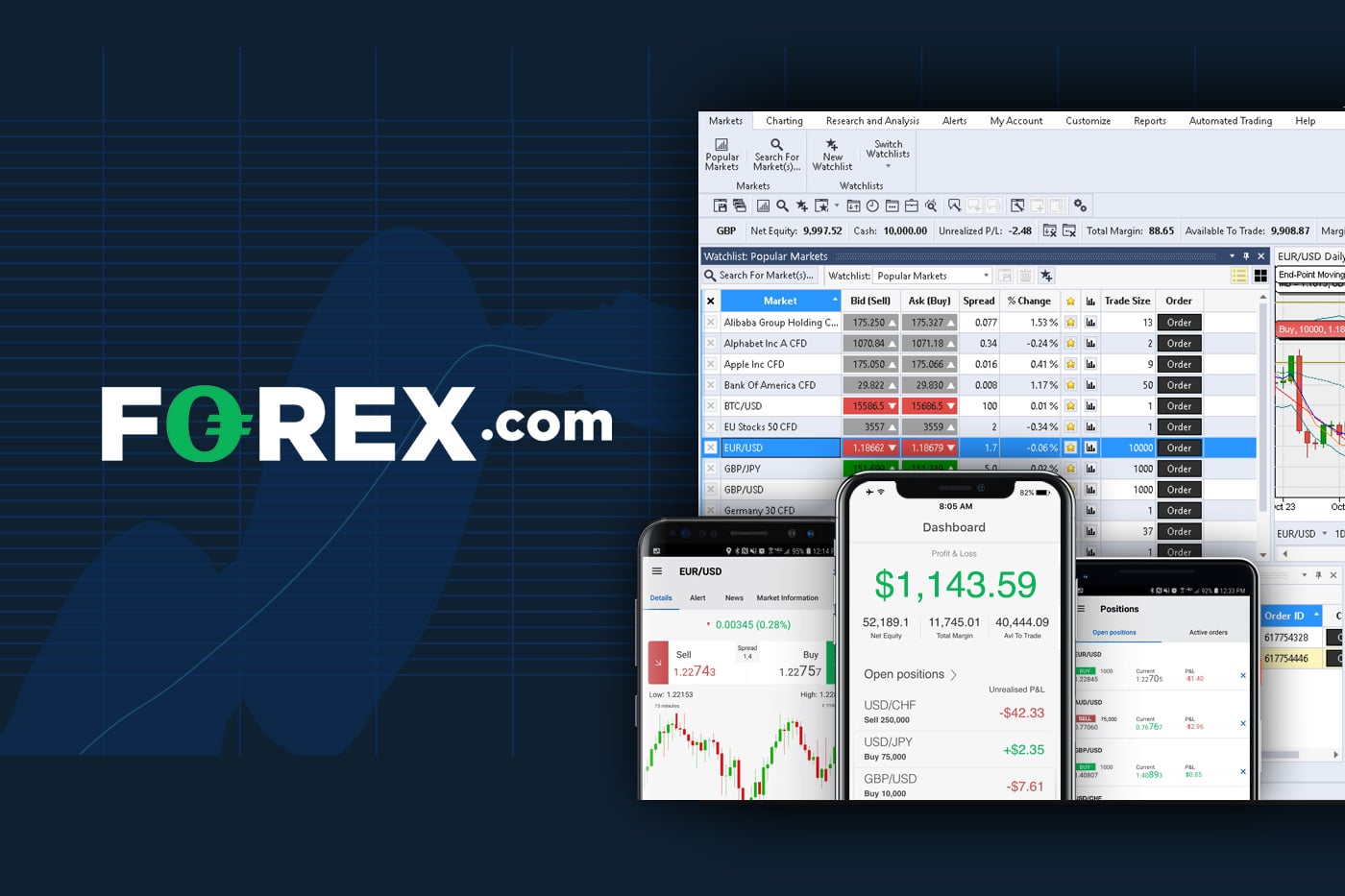
  • Forex.com is the leading U.S broker that provides a forex.com demo or a MetaTrader demo account.
  • Pepperstone is an excellent broker that offers a 30-day demo account that comes with $50,000 in virtual funds.


What is a Forex demo account?

It is a trading account funded with virtual money that allows the trader to get familiar with certain aspects of trading. Since the accounts are funded with virtual money by the broker, the trader can get familiar with trading strategies and the platforms without the risk of losing their funds.

A forex demo account is also called ‘Paper Trading Account,’ as it is used to practice trading or to try out a new trading strategy without any risk to the trader’s actual money.

For beginners, the demo account serves as a way of helping them learn and get familiar with various aspects of forex trading.

Thanks to the demo account, traders can quickly understand how to place orders, manage existing trading positions, and carry out other complex functions like fine-tuning a trading strategy or more.

If you are new to the trading space or an aspiring trader, then we highly recommend that you first get familiar with the process by using a demo account. Once you are comfortable and have learned a few things, you can start trading with real money.


Best Forex Demo Accounts 2020

Due to the large trading volume of the forex market, it is not surprising that we have hundreds or even thousands of companies offering brokerage services.

However, some brokers offer better services than others. When it comes to the best demo accounts, three brokers stand out as the best.


eToro – Best for Non-US Traders

This is perhaps the largest social trading platform in the world. eToro is home to thousands of traders. The broker funds its demo accounts with $100,000 in virtual money and provides traders access to various trading tools and features. They can also trade other assets like cryptos, stocks, and commodities.

Traders can also try out trading strategies in the demo account before doing them in the real one. Those that wish to start using the real trade account at any time can simply switch between the two accounts.

However, you’ll need to deposit actual money before you can use the real account. Finally, combining the practice account with the copy trading and social trading tools is an advantage that only this broker offers.


eToro Fees

Type of fees amount charged
Deposit fees free
Withdrawal fee $5
Conversion fees from 50 pips
Inactivity fee $10/month


Visit eToro Now


Plus500- Demo Broker for International Traders

The Plus500 demo account is designed to replicate the real market conditions as closely as possible. Traders get a chance to practice trading commodities, indices, currencies and stocks across some of the leading instruments, including currency pairs and shares.

With the Plus500 demo account, you are given virtual funds to practice and develop your trading strategies by buying and selling assets in real-time.

It also allows you to take advantage of the concept of leverage safe in the knowledge that your personal money isn’t at risk. Anyone can use the Plus500 demo account without opening an actual trading account with the platform.

The platform has buttons that will allow you to easily switch between the demo and real accounts effortlessly.  Thus, allowing you to test out your ideas on the demo and easily switch to the live trading platform to implement them.


Plus 500 Fees

Type of fees amount charged
Deposit fees free
Withdrawal fee free
Conversion fees 0.5% of the profit
Inactivity fee $10/month


Visit Plus500 Now


Forex.com – Best for US Traders

Forex.com is an excellent broker, especially for traders living in the United States. As one of the leading brokerage platforms in the world, forex.com offers an excellent demo account to traders.

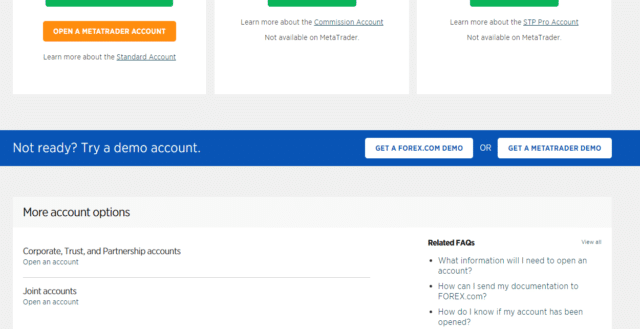
The trader can choose either a forex.com demo or a MetaTrader demo account. The demo account is available for 30 days, and it is risk-free.

The traders have access to all the trading tools and other features available to the live trading markets. The forex.com demo account comes with $10,000 virtual funds, allowing traders to access the forex market and trade the currency pairs.

With a forex.com demo account, you can trade risk-free since the money you are trading with is virtual. You can also access the various markets and practice trading under regular market conditions, experiment with various trading strategies to see which one works best and become familiar with the forex.com trading platform.


Forex.com Fees

Type of fees amount charged
Deposit fees free
Withdrawal fee $25 for local and $40 for international
Conversion fees Based on transaction
Inactivity fee $15/month


Visit Forex.com Now


Pepperstone- Best Demo Broker with Virtual Funds

Pepperstone is one of the leading Australian brokers that offer services to traders globally. They offer a 30-day practice trading account that comes with $50,000 in virtual funds.

The demo account on Pepperstone has similar features like the live trading account, including platforms like MT4 and MT5. It has other features like economic calendar, market analysis, market news, and access to other markets like cryptocurrencies, equities, USD index, commodities, and indices.

On a Pepperstone demo account, the leverage reaches up to 1:200 maximum (30:1 under FCA). The demo account itself is available for use for only a period of 30-days.

Those that desire to keep their account open longer can request another 30-day demo period or they can recreate another account.


Pepperstone Fees

Type of fees amount charged
Deposit fees free
Withdrawal fee free
Conversion fees $3.50 per $100,000 bought
Inactivity fee None


Visit Pepperstone Now


What are the Pros and Cons of Demo Accounts?

Pros

  • Understand market dynamics: The forex demo account helps traders understand how the market works. With the demo account, you can learn how to open and close trades, monitor performances, use charts, and more.
  • Free and easy: Opening forex demo accounts are easy and free. When opening such accounts, all you need is your name, email address, and sometimes a valid phone number. The accounts are funded with virtual funds, which means you don’t have to fund them.
  • Safety of personal funds: Thanks to forex demo accounts, you don’t have to lose money during the learning or testing process. The accounts come with virtual money, which can be used for trading purposes. You can learn forex trading and test your trading strategies without using or losing money.
  • Understand real-life market scenarios: The demo accounts help you learn and understand the real-life market conditions. Since the scenarios are based on real-time forex trading situations, you will get a chance to learn how to reach constant market fluctuations. Thus, you will learn how to adapt more quickly to the volatile nature of the market.
  • Practice sound money management techniques: demo accounts allows you to practice good money management techniques as they are key to success in forex trading. You will learn how to money real exchange rate movements and see how the benefits accrue to become profits.
  • Learn to manage your emotions when trading: most people fail because they trade with emotions. Practicing with demo accounts will show you how to manage emotional responses in both winning and losing scenarios. You will learn how to control fear, greed, and hope as part of the trading process.
  • Try out a broker’s trading platform: the demo account allows you to test the trading platform supported by a broker and determine if it suits your trading style.
  • Check for new features and services: Traders can use the demo account to check for and test new features and services provided by a broker.


Cons

  • The fact that traders are using virtual money is a real drawback. Since the traders know that they don’t stand to lose anything when using the demo accounts, they sometimes don’t tend to be serious with the trading process. When using a real account with real money, a trader is forced to sit up and become serious since they could lose everything in an instant. That is not the feeling they get when using the demo account.
  • Limited duration and funds: most of the time, there are limits to the period you can use a demo account and the amount of funds available.
  • Trading conditions might differ: while demo accounts seem realistic, the reality of live-trading is different, especially when faced with fast markets and major economic data releases.
  • Success in real-live trading isn’t assured: although you might be a successful trader using a demo account, that doesn’t assure success in the real market.


Why are Practice Accounts so Important?

Practice accounts are important for traders because of the advantages they offer to them. Without practice accounts, traders won’t be able to learn more about the market, trading platforms, tools, and more. Here are three crucial reasons why practice accounts are important.


Practice trading

The apparent reason why they are important is that practice accounts are primarily used to practice trading, allowing the traders to familiarize themselves with the trading conditions.

Most brokers offer the same data feed in both demo and live trading accounts. Thus, ensuring that even though you are using a demo account, the market conditions are similar to the live markets. Hence, you get to test your trading prowess in a safe and risk-free condition.


Test trading strategies

A demo account is the first place a trader would deploy trading strategies to see if they are favorable or not. It is best to test your trading strategies on a demo account to see how well they perform.

Since demo accounts have free-risk trading environments, traders can test and tweak the trading strategies without fear of losing real trading funds in the process.


Risk management

With the help of demo accounts, traders learn how to manage risk. Practicing accounts help them understand certain situations such as the number of positions to open units or lot sizes to trade and more.

Once they fully understand the risk management techniques, it becomes easier to deploy them in the live trading environment.


How to Open a Demo account

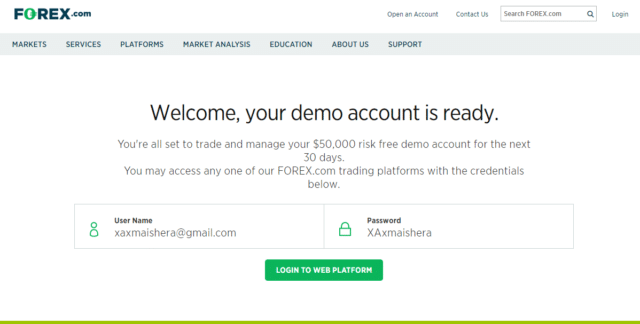
We will use the forex.com platform as an example of this situation.

  • Visit the broker’s official website and navigate to open an account

  • Select ‘Get a Demo Account,’ and you will be redirected to the signup page
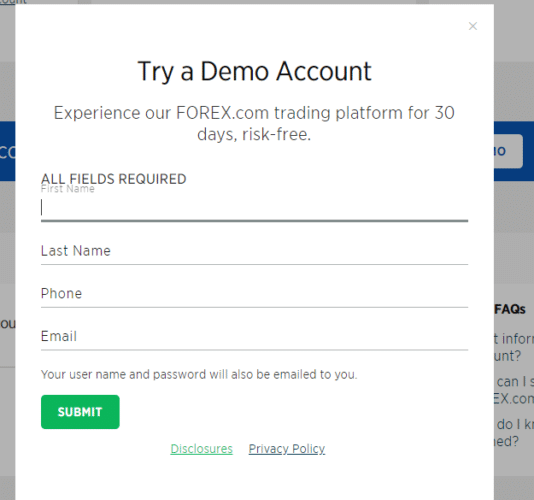
  • Insert the required details like name, email address, and phone number.

  • Submit your demo account application
  • The broker will assign you a username and password, and the demo account would be funded with the virtual money

FAQs

Can I withdraw my earnings from a demo account?

No, you cannot. The money isn’t real. The demo account is to help you get familiar with the trading environment.

Can I lose money trading with a demo account?

No, you won’t. The money you use for trading is virtual, and all your trades are risk-free.

What is the use of the demo account?

The demo account is to help you learn the basics of forex trading, understand how the trading platforms work. It also allows you test various trading strategies to determine which one works best for you.

Can I open multiple demo accounts on a single site?

No, you can only open a single demo account per broker.

Can I renew the demo account?

Most demo accounts last for 30 days, and you won’t be able to use them again. The broker will prompt you to switch to the live trading account afterward.

A Comparison of the Best Forex Demo Accounts

  eToro Plus500 Forex.com Pepperstone
Feature
24/7 customer support Yes Yes Yes Yes
Mobile app Yes Yes Yes Yes
Charting tools Yes Yes Yes Yes
Various markets Yes Yes Yes Yes
Free deposit and withdrawals No Yes No Yes
Price alerts Yes Yes Yes Yes
Real-time quotes Yes Yes Yes Yes
Copy-trading Yes No Yes Yes
Social trading Yes No No No
« Previous Page
Next Page »

Primary Sidebar

Forex School Online

High Probability Price Action Trading

How to make, manage and take profit from trades in the markets

Start Learning (It's Free!)

Turn Your Trades into Winners!

The Price action course is the in-depth advanced training on assessing, making and managing high probability price action trades.

Sign up for Free!

Recommended Broker

  • Broker
  • Min Deposit
  • Benefits
  • Score
  • Visit Broker

$200

T&Cs Apply
  • The Lowest Trading Costs
  • 50% Welcome Bonus
  • Award-winning 24 Hour Support
5
Trade Now FreeBets Reviews
Reviews

Footer

Get Our FREE Course, Bonus Strategies & Indicators!
X
Join Us Now!

Your capital is at risk.

X

CORNERSTONE LESSONS

Forex Trading for Beginners

Price Action Trading

How to Trade Forex

Technical Analysis

Forex Charts

Forex Trading Strategies

Money Management 

Compare Brokers

Best Forex Brokers

Forex Demo Accounts

Best Forex Trading Platforms

Forex Apps

Swap Fee Accounts

MT4 Brokers

CATEGORIES

Forex Videos

Trading Lessons

Weekly Trade Ideas

Start Here Guide

ForexSchoolOnline.com helps individual traders learn how to trade the Forex market

WARNING: The content on this site should not be considered investment advice and we are not authorised to provide investment advice. Nothing on this website is an endorsement or recommendation of a particular trading strategy or investment decision. The information on this website is general in nature so you must consider the information in light of your objectives, financial situation and needs.

Investing is speculative. When investing your capital is at risk. This site is not intended for use in jurisdictions in which the trading or investments described are prohibited and should only be used by such persons and in such ways as are legally permitted. Your investment may not qualify for investor protection in your country or state of residence, so please conduct your own due diligence or obtain advice where necessary. This website is free for you to use but we may receive a commission from the companies we feature on this site.

We Introduce people to the world of currency trading. and provide educational content to help them learn how to become profitable traders. we're also a community of traders that support each other on our daily trading journey

Forexschoolonline.com is not a financial advisor. Do your research before investing your funds in any financial asset or presented product or event. We are not responsible for your investing results.

Copyright © Forex School Online Sitemap  - Privacy Policy - Disclaimers & Terms of Use - CONTACT US